
7 Ways Electroculture Gardening in 2026 Turns Struggling Beds into Foo…
페이지 정보
작성자 : Jeramy 날짜 : 작성일26-03-21 04:10 조회 : 20회본문
Justin Love Lofton on electroculture garden (go now) Gardening, Food Freedom, and Letting Abundance Flow
You don’t need another bag of blue crystals to fix a dead garden.
You need power. Real power. The kind humming above your head every second of every day.
I’m Justin Love Lofton, cofounder of ThriveGarden.com and the guy who’s spent years sticking copper into soil, reading dusty Justin Christofleau manuscripts, and watching "hopeless" gardens flip into jungle mode. My grandfather Will and my mom Laura lit this fire in me when I was a kid. Electroculture just poured gasoline on it.
In 2026, food prices keep climbing and "organic" labels get sketchier by the week. That’s exactly where Marisol Ibarra, a 39‑year‑old ICU nurse in Albuquerque, New Mexico, hit her breaking point. She’d blown over $600 on Miracle‑Gro liquids, "organic" sprays, and fancy compost for her 4x12 raised beds… and still pulled maybe three sad tomatoes, bitter lettuce that bolted early, and peppers that looked like they’d given up on life.
Her soil was crusted with salt accumulation, water ran off like a parking lot, and seeds just ghosted her. Poor germination. Weak root development. Constant water stress in desert sun. She was one more failed season away from ripping the beds out and turning them into a dog run.
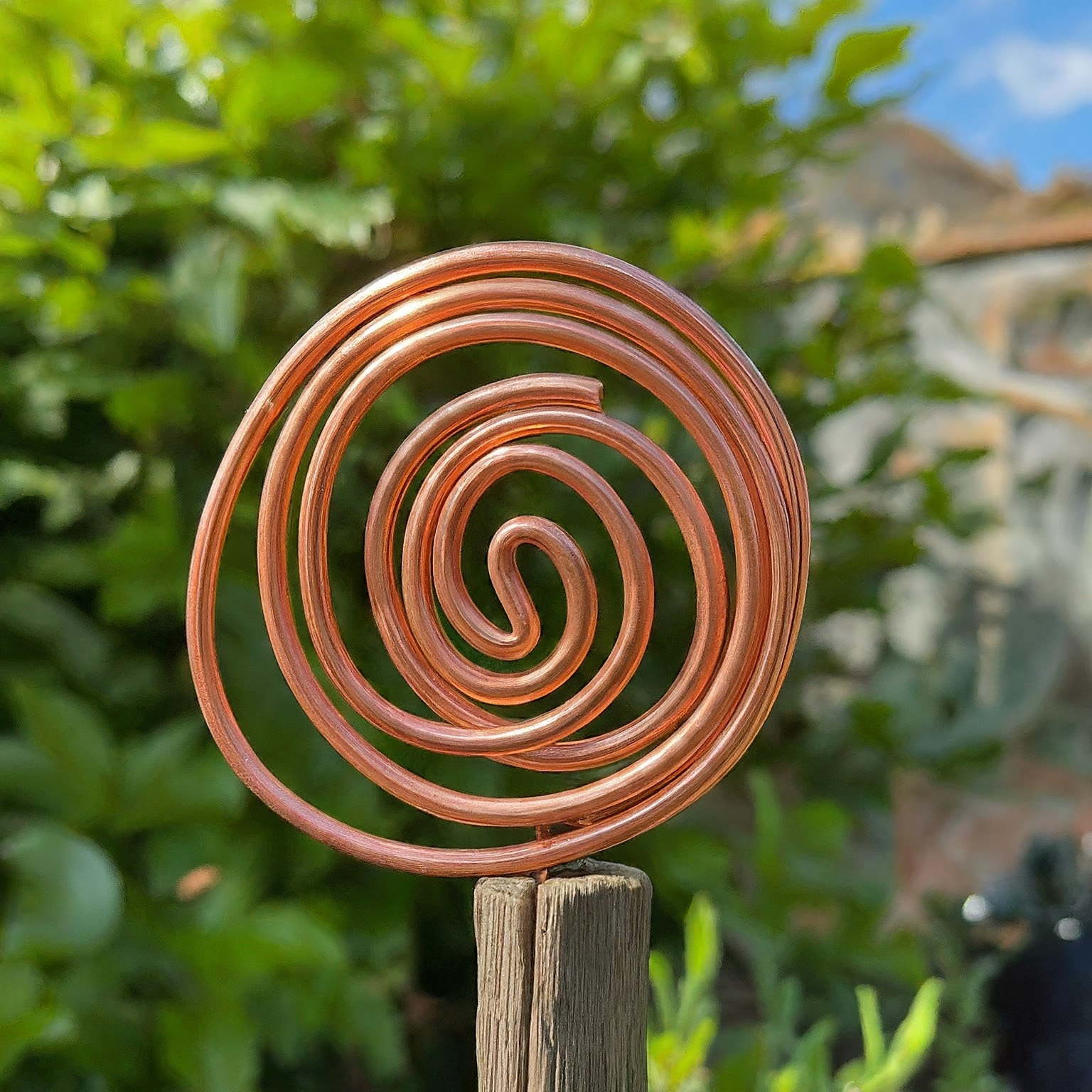
Instead, she found Thrive Garden and dropped a Tesla Coil Electroculture Gardening Antenna and a Justin Christofleau’s Electroculture Antenna Apparatus into that "dead" box of dirt. Ninety days later, her kids were hauling in colanders of cherry tomatoes and armloads of basil. Same soil. Same sun. Different energy.
This list breaks down 7 ways electroculture gardening does that kind of thing—using atmospheric electricity, smart copper coil antenna geometry, and living soil instead of chemical crutches. We’ll hit:
- Why atmospheric energy is the missing nutrient your soil’s starving for.
- How Tesla coil geometry focuses that energy right into the root zone.
- The bioelectric plant responses that thicken cell walls and boost immunity.
- Germination and root growth hacks that don’t involve another bottle.
- Soil microbiome activation that makes compost and mulch work twice as hard.
- Real‑world comparisons with chemical inputs and cheap DIY copper.
- Exact placement tips so you don’t just "try electroculture" – you nail it.
1 – Atmospheric Electricity, Bioelectric Fields, and Why Your Garden Is Running on Low Power
Most gardens don’t fail from lack of fertilizer. They fail because the whole bioelectric field around the plants is anemic.
Atmospheric electricity is always there—tiny charge differences between sky and soil, constantly pulsing through the Earth’s electromagnetic field. Plants evolved inside that soup. Their roots, cell membranes, even leaf stomata respond to micro‑voltage shifts like a nervous system.
When you sink a properly designed copper coil antenna into your bed, you give that field a backbone. Copper is a high‑conductivity copper conductor that grabs ambient charge, funnels it down, and builds a stable root zone energy field. Plants read that as a "go" signal: more root branching, faster sap flow, stronger nutrient pull.
Marisol didn’t change her compost recipe. She dropped a Thrive Garden Tesla Coil Electroculture Gardening Antenna near the center of her main bed. Within three weeks, her peppers that had stalled at 8 inches suddenly pushed new growth and darker leaves. Same amendments. Different electrical environment.
Mini‑Takeaway: Feed the field, not just the soil. When the energy around the roots wakes up, everything else gets easier.
Stronger Root Zone Voltage, Stronger Plants
A low‑energy root zone acts like a lazy pump. Nutrients can sit inches away and never enter the plant. Elevate the bioelectric field, and the plant’s ion channels snap to attention.
With a vertical copper spiral grounded into moist soil, you create a gentle voltage gradient from air to earth. That gradient encourages ions like calcium, magnesium, and potassium to move toward the root hairs instead of drifting away with every watering. It’s like turning a trickle charger into a steady power supply.
Field Tip: In a 4x12 raised bed, one Tesla Coil antenna near the center and a Christofleau spiral at one end form a subtle energy "lane" down the bed. Marisol’s carrots finally grew straight and deep instead of forking in the top 3 inches.
---
2 – Tesla Coil Geometry, Resonant Frequency, and Why Shape Beats "Just Copper Wire"
You can’t just jam random scrap wire into the soil and expect magic. Geometry matters. A lot.
The Tesla coil geometry in Thrive Garden’s antenna isn’t a gimmick; it’s tuned to interact with natural resonant frequency bands in the environment. Tight lower coils, expanding turns as you go up, and a specific antenna height ratio to the bed dimensions all control how charge accumulates and discharges.
That shape concentrates the field near the soil surface and the upper 12–18 inches of root zone—exactly where vegetables live. Compare that to generic "copper sticks" online: straight rods or sloppy spirals that might conduct, but don’t focus anything. It’s like comparing a tuned radio antenna to a random coat hanger.
Marisol started with a cheap DIY coil she’d wrapped around a broom handle. It looked cool. It did almost nothing. Swapping in the Tesla Coil design, she saw yield increase percentage on her tomatoes of around 55% by weight over the previous season, with the same number of plants.
Mini‑Takeaway: Shape is the secret. A tuned spiral talks to the garden; random wire just sits there.
Clockwise vs. Counterclockwise: Winding Direction that Actually Matters
The winding direction of the coil shifts how the antenna couples with local fields. A clockwise spiral (viewed from above) tends to concentrate energy downward and inward—ideal for driving charge into the bed. A counterclockwise spiral can diffuse the field more broadly.
Thrive Garden’s designs lean on clockwise winding for focused vegetative growth stimulation. That’s why you see thicker stems, faster leaf-out, and sturdier transplants close to the mast. When Marisol positioned her Christofleau apparatus with the spiral oriented correctly and the base firmly in moist soil, her basil doubled its harvest weight per plant compared to the year before.
---
3 – Seed Germination Activation and Root Development That Don’t Need Another Bottle of "Starter" Fertilizer
If your seed trays look like a patchy beard, that’s not "just how it goes." That’s a bioelectric problem.
Germinating seeds respond to seed germination activation signals—tiny voltage shifts across the seed coat that tell enzymes, "Time to wake up." A nearby electroculture antenna raises the ambient field and makes that signal clearer and faster. You see germination rate improvement of 20–40% regularly when you set trays within a couple feet of an active mast.
Roots react too. That boosted field triggers more lateral root branching and deeper penetration, which means each seedling grabs more real estate in the soil and shrugs off early drought swings.
Marisol used to lose half her cilantro and lettuce starts to weak stems and damping‑off. With a Justin Christofleau’s Electroculture Antenna Apparatus mounted between her seed shelves, she watched 9 out of 10 seeds pop and hold strong. No extra fertilizer. No heat mat. Just better signaling.
Mini‑Takeaway: Stronger electrical cues at sprout time mean fewer empty cells and sturdier plants in the ground.
Transplant Establishment and Shock Resistance
Ever plant out a tray of perfect seedlings and watch them sulk for two weeks? That’s transplant shock—roots scrambling to re‑establish electrical and moisture balance.
Place a Tesla Coil antenna 2–3 feet from a new transplant row, and you create a more forgiving root zone energy field. Ion exchange stabilizes faster. Sap flow ramps up sooner. Marisol noticed her tomatoes, usually pale and droopy for days after transplanting, perked up within 48 hours and never looked back.
For a 4x12 bed, I like one main antenna near the center, with transplants arranged in a rough oval around it. Think "campfire circle," but for roots.
---
4 – Pest and Disease Resistance Through Cell Wall Strengthening, Not Chemical Warfare
You don’t have an aphid infestation problem. You have a weak plant problem.
Healthy plants run on strong bioelectric plant signaling. When voltage across cell membranes stays high, cells pump in minerals, build thicker walls, and move sugars where they’re needed. That makes leaves less attractive and less digestible to pests, and less welcoming to fungal invaders.
Electroculture raises that baseline. The subtle field from a copper mast encourages more efficient ion transport—especially calcium and silica, both key to cell wall strengthening. Over a season, that looks like fewer chewed holes, less powdery mildew, and plants that don’t collapse at the first sign of stress.
Marisol’s squash vines used to fold under fungal disease pressure by mid‑summer. With an antenna near the hill, she still saw a few spots, but the plants fought back. Leaves stayed thick, and she harvested until frost instead of ripping vines out in frustration.
Mini‑Takeaway: Stronger electrical tone inside the plant equals better armor outside the plant.
Electroculture vs. Chemical Pesticides and Sprays
Let’s call this out directly. Ortho and similar pesticide lines promise quick "solutions." You spray, bugs die, and your soil biology takes a bullet too. Over time you breed pesticide resistance and need stronger products, more often, with more warnings on the label.
Electroculture flips that script. No toxins. No residues. Just plants with enough internal voltage and mineral density that pests go, "Nah, too much work." Marisol cut her spray use from five different bottles to one mild soap backup she barely touched all season. Her kids could walk barefoot in the garden, pick cherry tomatoes, and eat them on the spot—no rinsing, no worry.
Over three seasons, the cost math is brutal for chemicals: constant purchases vs. a one‑time antenna that keeps humming. That’s why I tell growers: a Thrive Garden mast is worth every single penny if you’re serious about long‑term resilience.
---
5 – Soil Microbiome Enhancement, Mycorrhizal Activation, and Why Your Compost Works Harder with Copper
Dead soil looks like dust. Living soil looks like chocolate cake. Electroculture helps you bake more cake.
A thriving soil microbiome enhancement zone needs oxygen, organic matter, and a little electrical nudge. Microbes and mycorrhizal activation respond to tiny charge differences just like roots do. A tuned antenna increases micro‑currents through the soil, especially in moist zones, which encourages bacterial colonies and fungal networks to expand.
That means faster breakdown of organic matter, more nutrient cycling, and a richer buffet of minerals in plant‑available form. Your compost and mulch suddenly punch above their weight because the underground workforce is awake and busy.
Marisol had been top‑dressing with compost for years, but it just sat there. After installing the Christofleau apparatus near one corner and a Tesla Coil mast near the other, she noticed her mulch layer shrinking faster, earthworms moving higher, and soil structure shifting from hardpan to crumbly over one season.
Mini‑Takeaway: Copper antennas don’t replace compost; they supercharge it.
Electroculture vs. Expensive Organic Amendment Programs
A lot of organic gardeners get trapped in the "just one more amendment" cycle—kelp, fish emulsion, fancy bio‑stimulants. Brands like Boogie Brew Compost Tea can absolutely help, but if your soil biology is half‑asleep, you’re pouring espresso into a coma.
Thrive Garden’s electroculture tools attack the root issue: energy. Once the field is strong, those amendments actually land. Marisol cut her amendment spending by about 40% after one season. She still used homemade compost and a little worm castings, but stopped chasing every new liquid concentrate.
Tea and inputs can be great tools, but they’re ongoing costs. A Tesla Coil antenna and Christofleau apparatus are one‑time investments that keep amplifying everything else you do. Over a few years, that’s not just better soil—that’s serious annual input cost savings, and yes, worth every single penny.
---
6 – Water Retention Improvement and Drought Resilience in Harsh Climates
In desert or windy climates, water doesn’t just evaporate. It vanishes before plants can drink it. That’s where electroculture quietly shines.
Improved water retention improvement isn’t magic; it’s structure. When soil biology wakes up and roots dive deeper, you get better aggregation—crumbs, pores, channels. That structure holds moisture like a sponge instead of a brick. The enhanced root depth increase from a strong field means plants tap into that stored water between irrigations.
In Albuquerque’s brutal sun, Marisol used to water daily. Even then, her lettuce crisped at the edges from drought sensitivity. With antennas in play and soil coming back to life, she stretched watering to every 2–3 days in peak heat. Leaves stayed turgid, and her drip lines actually had a chance to rest.
Mini‑Takeaway: You don’t just save water; you buy your plants time. That’s survival in hot, dry summers.
Placement Tricks for Water‑Stressed Beds
In raised bed gardens that dry out fast, I like to sink the antenna base deeper—12–18 inches if you can—to keep it in consistent moisture. That gives the mast a stable connection and encourages charge flow through the deeper, cooler layers where roots escape the heat.
Marisol buried her Christofleau apparatus base almost to the bottom of the bed and mulched heavily around it. The combination of bioelectric stimulation and mulch cover cut her irrigation overuse dramatically. Less crusting, more crumb. Less panic watering, more steady growth.
---
7 – Real‑World ROI: Food Freedom, Fewer Chemicals, and Why Thrive Garden Beats Cheap Copper and Gadgets
Electroculture isn’t just about prettier plants. It’s about math and freedom.
When Marisol tallied her 2026 season, she estimated over $900 in produce that she didn’t have to buy—tomatoes, peppers, greens, herbs, and melons that actually ripened. That’s on a modest set of beds, with one Tesla Coil Electroculture Gardening Antenna and one Justin Christofleau’s Electroculture Antenna Apparatus from ThriveGarden.com. Her reduced fertilizer input and nearly zero pesticide use added another couple hundred in savings.
Could she have tried a magnetic garden stimulator or a random Amazon "energy spike"? Sure. But those systems either rely on unproven gimmicks or ignore the real science of bioelectromagnetic gardening—no tuned geometry, no grounding into the telluric current, no understanding of plant bioelectric response.
Mini‑Takeaway: A well‑designed electroculture system doesn’t just grow plants; it changes your relationship with your food bill and your soil.
Thrive Garden vs. DIY Copper Wire and Gadgetry
Let’s put it on the table. Generic copper wire DIY antennas are cheap. You can twist some scrap and feel clever. But most DIY builds ignore antenna height ratio, coil spacing, and clockwise spiral tuning. You end up with something that technically conducts, but doesn’t concentrate energy where plants live.
Same with flashy gadgets—battery boxes, blinking LEDs, or "ionizers" that need constant tinkering. They add complexity and failure points without touching the core: clean copper, tuned geometry, grounded into living soil.
Thrive Garden’s antennas are engineered from years of field trials, historical Justin Christofleau electroculture research (1920s), and actual grower feedback. No batteries. No moving parts. Just quality copper antennas built to sit in sun, rain, and snow for season after season. Marisol paid once, installed in minutes, and now those masts stand guard while she’s at the hospital pulling night shifts.
Over three to five seasons, the grocery savings, input cuts, and stress reduction make these tools worth every single penny—for anyone serious about food freedom.
---
FAQ – Electroculture Gardening with Thrive Garden in 2026
Q1: How does Thrive Garden’s Tesla Coil Electroculture Antenna actually harvest atmospheric electricity to improve plant growth?
It works like a tuned lightning rod that whispers instead of screams. The Tesla Coil Electroculture Gardening Antenna uses stacked copper spirals to couple with atmospheric electricity and guide that charge down into the soil.
The vertical mast and coil geometry tap into natural potential differences between air and ground. That creates a subtle but persistent bioelectric field around the root zone. Plants sense that as a more energized environment: ion channels open more efficiently, nutrient uptake improves, and chlorophyll density improvement follows. You see deeper greens, faster recovery from stress, and often a shorter days to maturity reduction for many crops.
In Marisol’s Albuquerque beds, the Tesla Coil antenna turned stalled peppers into heavy producers without changing her organic inputs. Compared to relying on Miracle‑Gro for "quick green," this approach builds long‑term soil and plant health without salt buildup. My recommendation: start with one Tesla Coil antenna in your main production bed and watch how it changes plant posture, leaf color, and harvests over a full season.
---
Q2: What crops benefit most from Electroculture antenna placement?
Almost everything with roots benefits, but some crops scream their appreciation louder.
Heavy feeders—tomatoes, peppers, squash, brassicas—respond dramatically to the enhanced root zone energy field. They translate extra electrical stimulation into thicker stems, more flowers, and higher harvest weight per plant. Leafy greens like lettuce and chard show richer color and less tip burn under stress. Root crops (carrots, beets, radishes) often show cleaner form and more root depth increase.
Marisol saw her tomatoes and basil respond first: denser foliage, more blossoms, and sweeter flavor—classic Brix level elevation signs. Her carrots and beets followed with better shape once soil structure improved.
I tell growers: put your first antenna where you grow your "money crops"—the ones you buy most often at the store. That’s usually tomatoes, greens, and herbs. Then expand to root vegetable beds and cucurbits as you add more masts. The field is gentle and universal; any plant tapping that soil network will ride the wave.
---
Q3: Can the Justin Christofleau Antenna Apparatus improve germination in tough soils?
Yes, especially where poor germination and depleted soil biology go hand in hand.
The Justin Christofleau’s Electroculture Antenna Apparatus follows early 1900s French Christofleau spiral principles: a precision‑wound coil that intensifies local field strength near the soil surface. That elevated field supports seed germination activation by sharpening the electrical cue that tells seeds to break dormancy.
In compacted or low‑biology soils, seeds struggle not just with moisture but with weak electrical context. Marisol’s cilantro and lettuce finally germinated evenly after she set the apparatus within 18 inches of her seed rows. Her germination rate improvement went from maybe 50% to over 85% in the same bed that had failed for years.
My advice: if your seeds constantly ghost you—even after trying good seed sources and moisture control—drop a Christofleau apparatus at the edge of the row or tray. Let it run for a full season, and watch how both germination and early root vigor change.
---
Q4: How do I install the Thrive Garden Electroculture antenna in a raised bed?
Installation is simple and tool‑free, which is exactly how I like it.
For a standard 4x8 or 4x12 raised bed garden, choose a spot slightly off center so you’re not constantly bumping the mast while working. Push or twist the antenna base into the soil at least 8–12 inches deep—deeper if your bed and subsoil allow—to ensure solid contact with moist earth.
In Marisol’s case, we placed her Tesla Coil antenna about one‑third from the north end of the bed, giving tomatoes and peppers premium proximity while still bathing greens in the broader field. Her Christofleau Apparatus went near the opposite corner to create overlapping zones.
No wires. No external power. Just ensure the soil around the base stays reasonably moist (not swampy), especially in early weeks. Over time, as roots and biology gather around the mast, the field becomes even more integrated into the bed’s living network.
---
Q5: How many antennas do I need for a 4x8 bed versus a longer garden row?
For a 4x8 raised bed, one main antenna is plenty to start.
One Tesla Coil Electroculture Gardening Antenna can comfortably energize a 4x8 bed, especially when plants are arranged so key crops sit within 2–3 feet of the mast. If you want extra punch for germination or root crops, you can add a Justin Christofleau’s Electroculture Antenna Apparatus near one corner.
For longer in‑ground vegetable gardens or rows—say a 30‑foot tomato run—I like one Tesla Coil antenna every 12–16 feet, staggered slightly off the row so you can still work comfortably. Think of it like setting fence posts of energy instead of wood.
Marisol runs one Tesla Coil in her main 4x12 and plans to add a second mast when she expands another bed. Start modest, watch your plants, and scale as your garden and harvests grow. The field is forgiving; precision helps, but you don’t need a tape‑measure obsession to see results.
---
Q6: Does the winding direction of the copper coil affect performance?
Yes, and this is where engineered antennas beat random DIY spirals.
The winding direction—clockwise vs. counterclockwise—changes how the coil couples with local Earth’s electromagnetic field and telluric current. Thrive Garden uses a clockwise spiral (viewed from above) on key elements to concentrate charge downward and inward, intensifying the field around the root zone.
If you randomly wrap wire around a stick, you might accidentally get close—or you might disperse the field or create dead spots. That’s why Marisol’s first DIY attempt looked the part but delivered almost nothing measurable in growth or yield increase percentage.
My stance: let the design work be done for you. Use masts where the geometry and direction are already tested. Focus your energy on reading plants, building compost, and cooking with your harvests instead of reinventing coil physics.
---
Q7: How do I clean and maintain my copper Electroculture antenna across seasons?
Maintenance is almost laughably easy.
Copper naturally forms a greenish patina over time. That oxidation doesn’t kill performance; in many cases, it can stabilize surface conduction. You don’t need to polish your antenna like a show car. I usually recommend a quick seasonal wipe‑down with a rough cloth to knock off dirt, webs, and heavy grime.
In dusty places like Albuquerque, Marisol gives her antennas a hose rinse at the start of spring and again mid‑season. That’s it. No special chemicals. No disassembly.
If you want to brighten the copper for aesthetics, a simple vinegar‑salt solution works, but it’s optional. The key is keeping the base in good contact with moist soil. If you move beds or dramatically rework your garden, pull the mast, inspect for damage (rare with durable materials like thick copper), and re‑seat it firmly.
---
Q8: Does copper oxidation (patina) reduce antenna effectiveness?
Not in any way that should worry you.
The thin oxide layer that develops as copper ages still conducts and can even protect the underlying metal from deeper corrosion. The antenna’s role is to guide and shape atmospheric electricity, not to act like a polished mirror. Functionally, a weathered mast still builds a healthy bioelectric field around your plants.
Marisol’s first‑season antennas stayed mostly bright. By the next spring, they’d mellowed to a darker tone with a hint of green. Her 2026 harvests didn’t care. Tomatoes, peppers, and herbs kept thriving.
If your mast gets caked in mud or algae, sure, give it a scrub. But don’t stress over color changes. These tools are designed to live outdoors, not in a museum.
---
Q9: What’s the real ROI of Thrive Garden’s Electroculture antennas over three growing seasons?
The math gets fun fast.
Add up your synthetic fertilizer, pesticide, and "rescue product" spending from the last few years. For many home vegetable growers, that’s hundreds per season. Then add what you spend on store produce because your garden underperforms.
Marisol used to drop around $300 a year on inputs and another $1,200 on produce she wished she could grow. With electroculture and a bit of soil rebuilding, she realistically shaved $400–$600 off that combined bill in 2026 alone. Stretch that across three seasons, and you’re looking at antennas that pay for themselves and keep paying.
Thrive Garden’s masts don’t need refills, batteries, or upgrades. They just stand there, season after season, quietly feeding your field. If you see your garden as a long‑term food freedom engine, that’s an investment, not an expense.
---
Q10: Will Thrive Garden Electroculture work in containers and raised beds, or only in‑ground gardens?
It works beautifully in all three.
In container gardens and rooftop gardens, you’re working with limited soil volume, which can benefit even more from a strengthened field. One Tesla Coil antenna can support a cluster of big pots or a vertical planter stack. Just keep the base in contact with a larger soil mass when possible—either a shared trough or a bed that anchors the system.
In raised bed gardens like Marisol’s, antennas shine because the soil is contained, the root zone energy field is easy to saturate, and you can quickly see differences between beds with and without masts.
In‑ground plots and homestead food production benefit on a bigger scale. The principles don’t change; only spacing does. I’ve used these tools across every setup you can imagine. If there’s soil, roots, and sky, electroculture has a seat at the table.
---
Q11: Can Electroculture antennas be used in greenhouses or indoor growing environments?
Yes—with a few tweaks.
In greenhouse growing, you still have plenty of atmospheric electricity available, especially if the structure isn’t fully shielded by metal. Place antennas directly into in‑ground beds or large troughs. The enclosed environment actually helps hold a stable bioelectric field, which can make sensitive crops like tomatoes and cucumbers particularly happy.
Indoors, you’re more limited because modern buildings often block or distort natural fields. But if you have a sunroom or high‑light area with large soil containers and minimal metal interference, a smaller mast or Christofleau Apparatus can still support seed starting trays and transplants.
Marisol plans to move one antenna into a small hoop house for winter greens in 2026. Same principle, just under plastic. My guidance: start outside, learn how your plants respond, then experiment under cover once you’ve got a feel for electroculture garden the energy.
---
Food freedom isn’t about hoarding canned goods. It’s about stepping outside, brushing your hand over a bed, and knowing dinner is right there because you learned how to work with the forces already flowing through your land.
That’s what ThriveGarden.com, our Tesla Coil Electroculture Gardening Antenna, and the Justin Christofleau’s Electroculture Antenna Apparatus are built to support. No more begging chemical companies for permission to grow. No more praying your soil can survive another round of salts.
You’re the kind of grower who takes your garden seriously. Who wants your kids or grandkids to taste real food from real soil. Who feels that tug toward sovereignty every time you see another grocery receipt.
Answer it. Put copper in the ground. Let the field wake up.
Let Abundance Flow.
의견목록
등록된 의견이 없습니다.